Self-adhesive labels and label printers
How to Choose Labels and a Label Printer
Every company, sooner or later, runs into the need to mark goods using self-adhesive labels. Whether it’s barcode labels for inventory tracking, a label with ingredients/composition, shipping labels, etc., there are many options—but they all lead to the same question: “How are we going to handle it?” We decided to write a clear, basic overview in this article, and we hope it will help you with your selection.

So let’s take a look together at the basic options and categories—both for consumables and for printers.
There are so many printers and labels on the market that you couldn’t possibly count them all—but how do you make sense of it? How do I choose the right one for myself? The basic question you need to answer is: How many labels will I print on a regular basis? It’s important to ask yourself this right at the beginning, for two reasons:
Choosing labels
Sheet labels
Labels can be purchased on sheets or on rolls. So if I know that I will only need to print labels from time to time and not in large quantities, I will most likely be fine with self-adhesive sheet labels .


Roll labels
But if I’m serious about label printing and need to print labels regularly and in larger quantities, I should choose self-adhesive roll labels and a suitable printer. In terms of speed and print quality, a proven solution is a thermal transfer printer (TTR). As the name suggests, it uses heat and a transfer ink ribbon for printing.
Choosing a printer
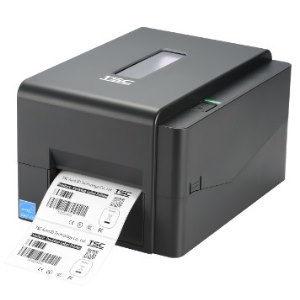
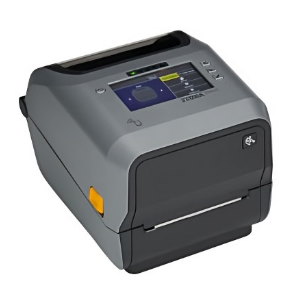
There are many TTR printers on the market. In the vast majority of cases, we supply our customers with desktop variants of TSC and Zebra TTR printers , which offer specs typical of devices in a higher price category while keeping compact dimensions and an attractive price. In addition, you can also use external unwinders for consumables, so you are not limited by roll size when choosing label rolls.
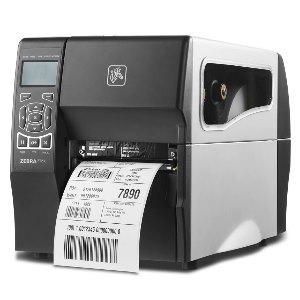
But if you truly need an industrial solution, we also offer industrial printer variants from TSC, Zebra and Printronix , which are genuinely professional devices with extensive configuration options. The printer price reflects this.
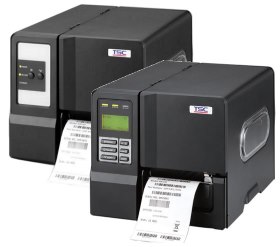
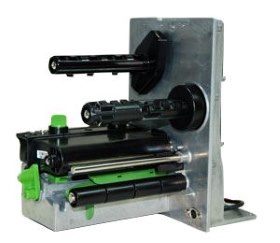
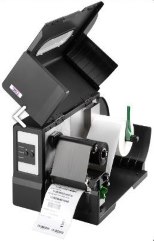
Choosing the right printer is a crucial factor that will affect your work going forward—so choose carefully with your future needs in mind.
Self-adhesive labels
We’ve covered the basic selection factors, so let’s take a closer look at self-adhesive labels. A question that is much more complex than it may seem at first glance.
Label size
When it comes to label sizes, variability is practically unlimited. Do you want a narrow and long label, or maybe a square one? No problem. Choose the label size based on its intended use. For printing barcodes, compact sizes are sufficient; for printing product composition/ingredients, we’ll choose a larger label. We keep common label sizes in stock, and you can find them in the Labels on rolls category. If you don’t find what you need among the most common sizes, this category includes a contact form you can use to request your required size. Write to us—we can arrange production of virtually any label size, even including full-color pre-printing (e.g., a company logo, etc.).
Label material
Label material
Another important factor is choosing the right material. The most commonly used label is the classic paper label.
Paper label
Sufficient for most applications. If the labeled goods are not exposed to rough handling during their journey through the sales/distribution cycle, choose this option. The price is significantly lower than for more durable labels, and they are more readily available.
Paper label assortment.
Polyethylene label
A durable label made of a material that easily withstands weather conditions. This makes it suitable for use in more extreme environments. The adhesive layer is additionally equipped with very strong SYNTYRE glue, which can be used on almost any surface. With this label, you don’t have to worry that it will be torn off or damaged during transport, for example. When using polyethylene labels, you need to use a
corresponding transfer ribbon
!
PE label assortment.
Special labels
Only briefly about this category. These are labels for special, narrowly targeted uses, such as textile labels or metallic labels, etc. We currently do not offer this type of label.
Label adhesive
A crucial part of choosing the right label is selecting the appropriate adhesive. You need to consider what surfaces you will be applying the labels to. If you will be applying labels to standard surfaces (smooth, flat surfaces), there’s no need for anything special—an ordinary paper label with standard adhesive will be sufficient.
It can also happen that you will need a label that can be peeled off easily without damaging or devaluing the surface (a common situation, for example, with book or magazine covers). In this case, you need to look for labels with an adhesive designed specifically for this purpose. Thanks to a special adhesive layer, the label can be peeled off without problems and the surface will not be damaged.
The last option you may encounter is the need to apply labels to uneven, porous surfaces. In this case, you need extremely strong and durable adhesive . This is what special durable labels with SYNTYRE adhesive are for. It’s an adhesive that allows labels to be applied to almost any surface and is resistant to weather conditions.
Thermal transfer ribbons (TTR)
As already mentioned, thermal transfer printing (TTR) is most often used for printing on labels. Printing therefore uses a TTR transfer ribbon which, thanks to heat from the print head, transfers the content onto the label. This makes printing practically instantaneous and without unnecessary delays. Print speed can reach impressive values, and accuracy is also excellent.
We choose the appropriate TTR ribbon winding based on the type of printer we will print on—i.e., based on the position of the print head in the printer.
We choose the correct ribbon width and length according to the printer and labels used. The TTR ribbon width must always be greater than the label width.
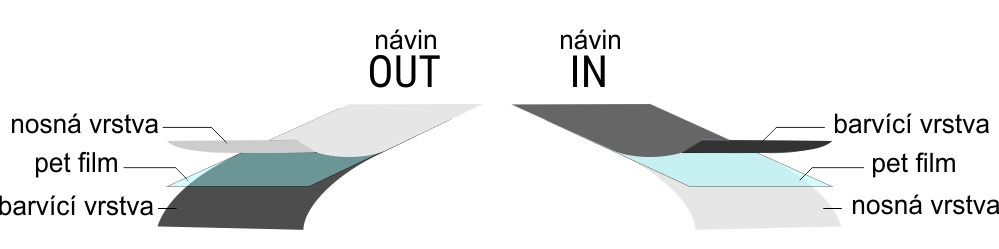
For TTR ribbons, we distinguish two basic winding types – IN and OUT
IN
– inner winding – the ink layer is placed on the inner/upper side of the ribbon
OUT
– outer winding – the ink layer is placed on the outer/lower side of the ribbon
A TTR ribbon is made up of three layers.
- The base element that protects the ribbon against excessive wear during printing is the silicone carrier layer .
- The second, separating layer is the so-called PET film . Thanks to this layer, the ribbon is flexible and also resistant to tearing.
- The final layer is the ink layer.
Depending on the type of ink used, the ink layer is divided into three groups – wax, wax-resin, and resin.
- Wax ink layer – The most commonly used ink layer with a high wax content. Thanks to this, it can be printed at lower temperatures. This type of TTR ribbon is suitable for printing on matte labels.
- Wax-resin ink layer – the ink layer is made from a mixture of wax and resin. Printing with this ribbon requires a higher temperature than wax ribbons, and it is suitable for printing on semi-gloss and gloss labels.
- Resin ink layer – this ink layer is largely made of resin. For printing, the printer’s print temperature needs to be set to the highest values. Ribbons with a resin ink layer are used for printing labels where high resistance to mechanical abrasion is required, or, for example, resistance to high temperatures.
That covers the basic terms and properties of the consumables needed for label printing. We hope our article has helped you get oriented in the range, and if you still need advice with your selection, don’t hesitate to contact us . We’ll be happy to help you choose.